Clinical laboratory scientists work across several of these benches; the later cards describe specialties, not eight mutually exclusive job titles. Titles and qualifications vary by location and employer. Each section has its own link you can share with someone curious about that work.
01 / GeneralistClinical laboratory scientist (CLS / MLS)
Runs and checks tests across disciplines, recognizes results that need a second look, and helps get reliable information to the care team. The same broad profession may be called medical laboratory scientist (MLS); local licensing and naming differ.
Why it matters: test quality and clinical decisions depend on trained judgment behind the instrument.
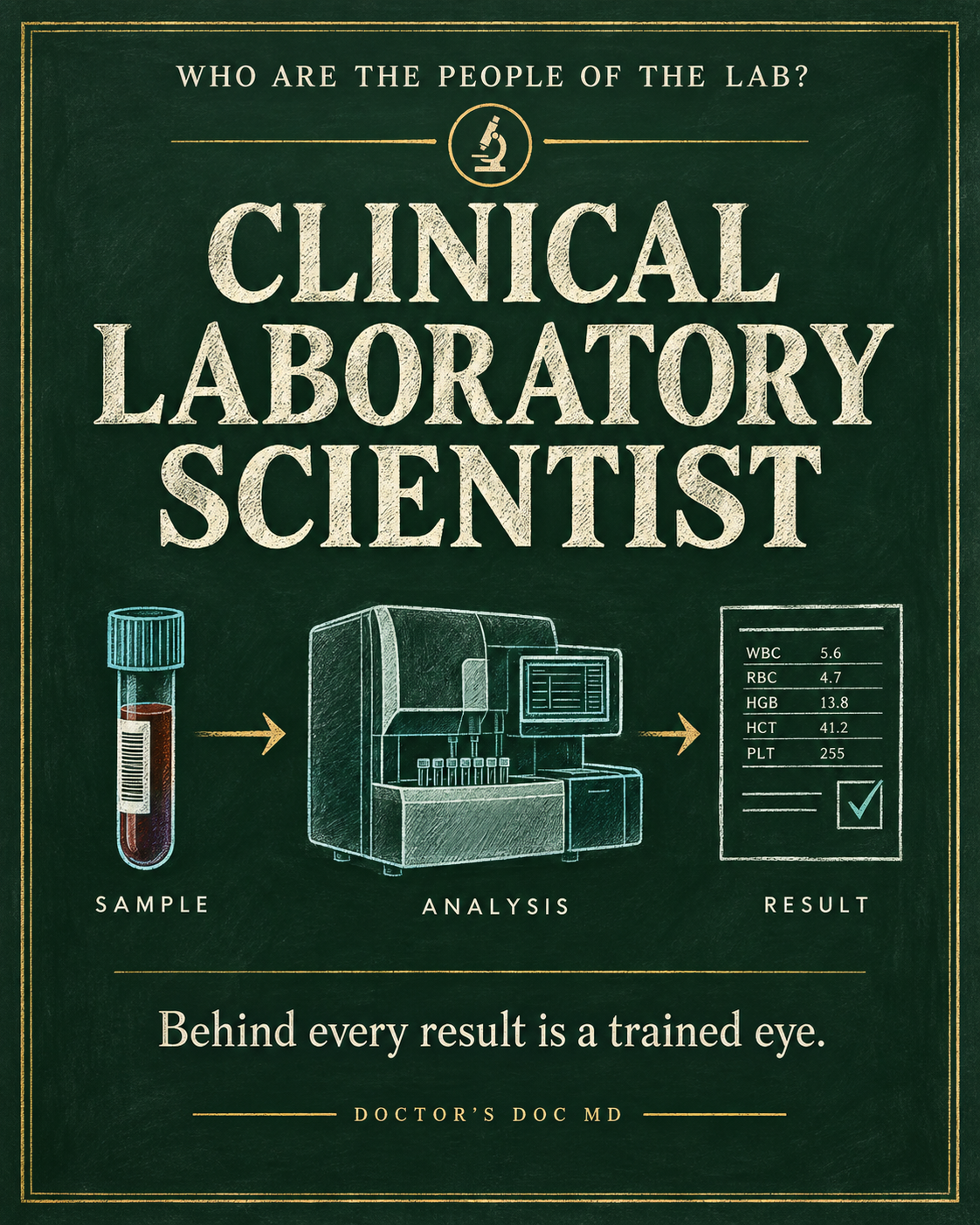
View the clinical laboratory scientist chalkboard
02 / CellsCytologist
Examines cells from screening and diagnostic specimens, flags changes that may call for a pathologist's review, and uses a practiced eye alongside newer tools.
Why it matters: subtle cellular clues can change what happens next for a patient.
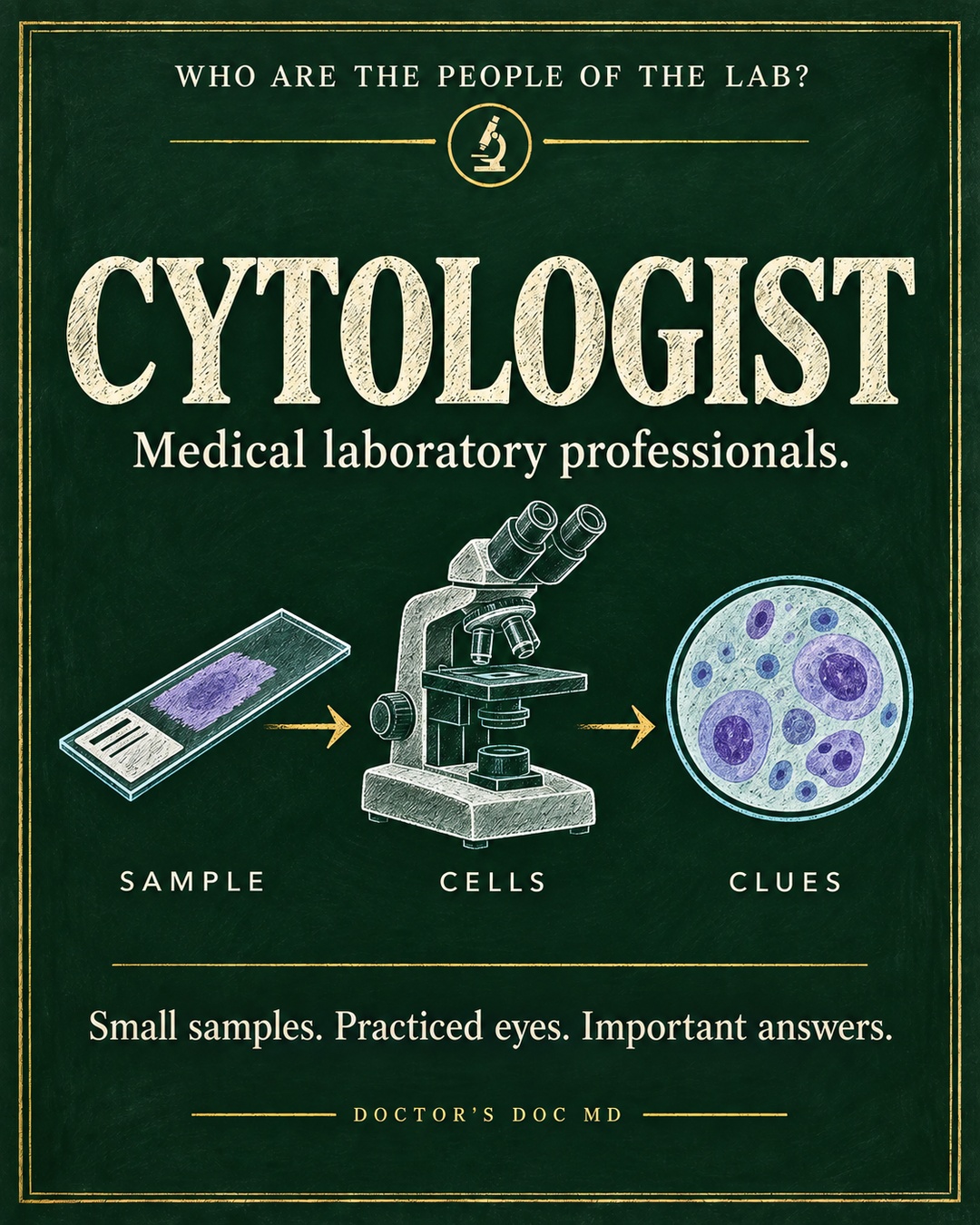
View the cytologist chalkboard
03 / TissueHistotechnician / histotechnologist
Prepares tissue for microscopic examination, from careful processing and sectioning to staining. A good slide lets the pathologist read the tissue rather than fight the preparation.
Why it matters: the diagnosis begins long before anyone looks through the microscope.
04 / GenesMolecular laboratory professional
Works with validated methods to detect genetic or microbial targets and checks whether a result is technically trustworthy. The work connects sample handling, controls, interpretation and quality.
Why it matters: precise testing can guide diagnosis and treatment, but only when the process is sound.
05 / TransfusionBlood bank / transfusion service
Types blood, screens for antibodies, checks compatibility, and helps select the right blood product under time pressure. Our first newsletter follows a blood donation after the chair; this is part of the team that helps make that gift safe for a recipient.
Why it matters: compatibility and careful release are essential when every minute counts.
06 / MeasurementClinical chemistry
Measures substances in blood and other body fluids, monitors instrument performance, and investigates results that do not fit. These numbers help clinicians track organ function and treatment.
Why it matters: a number is useful only when the team knows it can be trusted.
07 / Blood cellsHematology
Counts and studies blood cells, reviews unusual patterns, and connects automated results to what a specimen shows under the microscope.
Why it matters: blood-cell patterns can be an early clue to infection, anemia or a blood disorder.
08 / OrganismsMicrobiology
Investigates organisms in patient samples with cultures and other methods, checks findings carefully, and gives clinicians evidence to guide care.
Why it matters: knowing what is causing an infection can change the next decision.